

Why Is The European Recycling Business Going Extinct?
Introduction
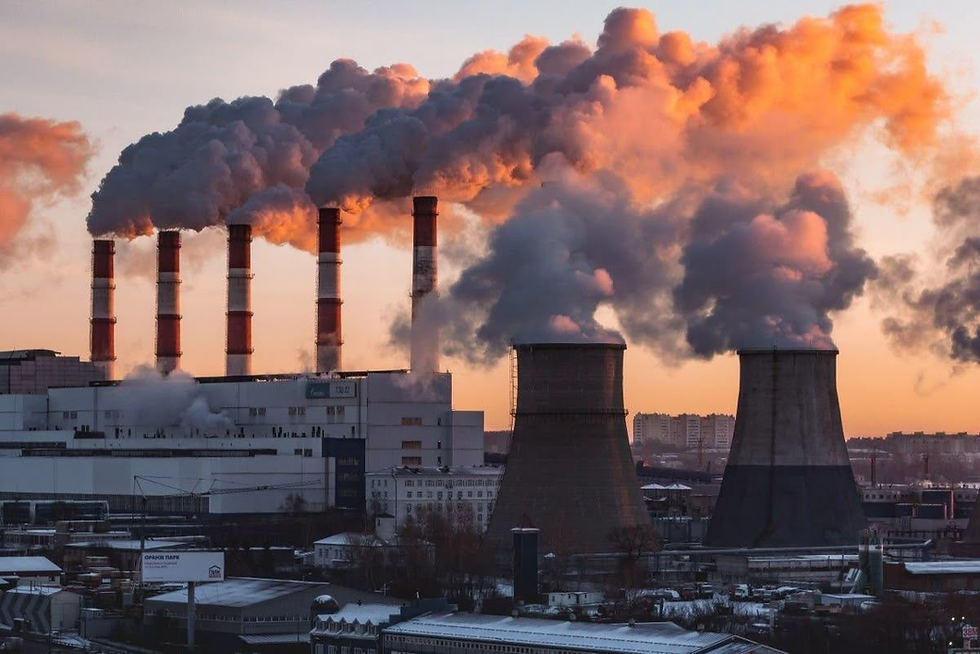
In recent years, global warming has become more prominent and acknowledged. Currently burning fossil fuels contributes to 90% of all the carbon dioxide in the environment, the last decade was the warmest 10 years ever recorded in our history and about 11 million tonnes (sas.org.uk, 2025)[1], of plastic enters the oceans nearly every year. We are polluting the planet at an alarming rate, which threatens the Earth’s health. In order to combat these overwhelming problems, processes like recycling play a vital role in restoring and repairing the planet.
Problems In The European Recycling Business
Companies like Biffa, Viridor and Veolia are specialized companies that recycle the used plastic packaging in the UK and sell this product with a new purpose to firms. Recycling firms in the UK are responsible for recycling about 17% of the packaging plastic used in the country (Sedgwick, 2024)[2]. However, recently many of these companies located around Europe have been facing a common problem; they are having to close down (Costa, 2025) [3].
This occurs due to many factors, one primary reason being the high recycling costs (Stokes, 2025)[4]. To sort, collect and clean the plastic waste is a time consuming and expensive process. Everything from the clean energy, labour to adhering to the environmental regulatory standards can be very expensive and further contribute to the already high set up costs to recycle plastic. Other materials like metal or glass are easier to recycle due to the fact that plastic has to go through an intense sorting process prior to being recycled. As a result, companies need to employ the labour for this tedious task, as well as invest in high tech sorting machines that carry out this process. All together, these factors contribute to high production costs, which will be reflected in the final price when sold to consumers. This becomes a problem especially when virgin plastic, new plastic made from oil and gas, as shown by the table below (Sanzillo, Mattei, and Sinha, 2024) [5], is cheaper and more affordable for businesses to buy . Because creating virgin plastic is a less capital intensive project, it tends to be more affordable and reasonably priced on the market. This causes firms to use alternatives such as virgin plastic that are more economical, which leads to less demand for recycled plastic due to their naturally higher cost. Therefore due to extremely high start up costs, businesses find it difficult to establish themselves and stay profitable over a long term.
Another key reason that is contributing to the closure of these European recycling companies is that recycled and virgin plastic can be sourced for cheaper from Asian companies. As of November 2024, these were the prices for HDPE (high density polyethylene) across continents (Sanzillo, Mattei, and Sinha, 2024) [6].

Asian countries are offering lower prices that European firms cannot compete with. Due to the lower operational and labours costs in Asia (Strategic Allies, 2025)[7], they are able to charge more competitive prices which makes them the more widely chosen option amongst firms when they want to buy packaging plastic, either virgin or recycled. Europe's significantly higher costs due to strict labour laws and high energy costs(Strategic Allies, 2025)[8] puts them out of the running especially when Asian firms are their competitors. As a result, even firms in Europe import the recycled plastic in Asia rather than acquiring it domestically as it lowers their cost of production.
Another attribute that is effecting the shut down of European firms is that when domestic firms have to dispose of their plastic waste, they have to pay these recycling companies to take their waste. European companies tend to charge higher prices than Asian firms as they need to employ more expensive labour and pay higher operating costs(Strategic Allies, 2025)[9]. Therefore firms, even within the EU, opt to export their resin waste to Asian or North American countries where they charge lower prices (Sanzillo, Mattei, and Sinha 2024) [10]. Despite additional exporting charges, their prices still remain more competitive than European firms. As a result, when the majority of firms choose to export their waste, it causes a scarcity of plastic waste, starving domestic firms of any feedstock to process. Hence, these companies are unable to achieve scale and efficiency which are necessary to lower prices.
Solutions
The ideal situation would be a circular economy. This is an economic system that reuses materials, especially when continuing production in a sustainable manner. This means that we should be using recycled plastic over virgin resin rather than treating them as substitutes that are interchangeable. With a model like this, it keeps materials in use for a long period of time in the economy which can be considered more efficient and environmentally friendly. However firms might argue that they would rather pay the plastic packaging tax on purchasing virgin resin rather than using recycled plastic simply because the costs are too high (Costa 2025)[11].
Moreover, Europe specifically is struggling to acquire plastic to recycle and find consumers that are willing to buy their recycled plastic (Plastic Recyclers Europe 2022)[12]. In order to tackle this problem, I think they should first add quotas to the amount of plastic that can be imported from other continents, targeting specific countries. This would lead to less plastic being imported into the country which creates an artificial scarcity. The laws of supply and demand state that when there is a scarcity, the prices would surge as a result of the basic economic problem. As prices of imported goods increase, European firms’ prices are now more competitive in comparison. The quotas should be more strict for virgin plastic in order to disincentivize businesses from purchasing this unsustainable alternative, helping work towards the goal of a circular economy. Therefore domestic firms may choose to buy recycled resin domestically instead as it is now the more affordable choice. Additionally, European countries should also limit the amount of exports. This means that firms are forced to recycle domestically rather than ship their waste to different countries where it would’ve been cheaper to process.
Subsidising domestic firms would also make a big impact in making the recycling companies more competitive. This means that by the government providing the establishment with a subsidy, they are reducing their cost of production per unit processed. Therefore as their costs decrease, they are able to charge lower prices too, making them more affordable. This would in addition to the export ban and quotas would further incentivize companies to buy recycled plastic, and dispose of resin waste locally.
Conclusion
The persistent problem of global warming and the common problem of plastic pollution exemplifies how the linear economic model is unsustainable. While major companies in Europe like Biffa or Viridor are working towards shifting into a circular economy, they are faced with many problems. One major problem being high start up and operational costs due to the highly regulated nature of the market where labour and clean energy are very expensive. Moreover the availability of virgin or recycled plastic from Asian markets makes it difficult to compete with European firms as they significantly undercut their prices when buying recycled plastic. Another factor contributing to the shut down of these firms is that firms chose to export their resin waste instead of processing it domestically due to the lower costs offered by international companies, making them the more favorable choice. In order to solve these problems, European countries should impose quotas and export bans to ensure that plastic is processed and bought domestically, keeping the domestic firms in business. Moreover, implementing subsidies would also allow recycling companies to reduce their prices and overall contribute to their ability to be more competitive.
References
sas.org.uk. 2025. “Plastic pollution: facts & figures.” https://www.sas.org.uk/plastic-pollution/plastic-pollution-facts-figures/.
Sedgwick, Alexandra. 2024. “The UK's Largest Plastic Waste Survey Reveals 1.7 Billion Pieces of Plastic Packaging Still Being Thrown Away by Households Weekly.” Greenpeace UK. https://www.greenpeace.org.uk/news/the-uks-largest-plastic-waste-survey-reveals-1-7-billion-pieces-of-plastic-packaging-still-being-thrown-away-by-households-weekly/.
Costa, MaryLou. 2025. “Can the plastic recycling industry be saved?” BBC, October 23, 2025. https://www.bbc.com/news/articles/c5yv8e0prg9o.
Stokes, Francis. 2025. “Plastic Recycling Industry Faces Crisis Amid Rising Plant Closures.” Plastic Recycling Industry Faces Crisis Amid Rising Plant Closures. https://www.chemanalyst.com/NewsAndDeals/NewsDetails/plastic-recycling-industry-faces-crisis-amid-rising-plant-closures-35291.
Sanzillo, Tom, Suzanne Mattei, and Abhishek Sinha. 2024. “Impact on Virgin vs. Recycled Plastics Prices and Implications for a Production Cap.” IEEFA. https://ieefa.org/sites/default/files/2024-11/Reviewed-14920-Briefing%20note_Petchem%20recycling%20prices.pdf.
Sanzillo, Tom, Suzanne Mattei, and Abhishek Sinha. 2024. “Impact on Virgin vs. Recycled Plastics Prices and Implications for a Production Cap.” IEEFA. https://ieefa.org/sites/default/files/2024-11/Reviewed-14920-Briefing%20note_Petchem%20recycling%20prices.pdf.
Strategic Allies. 2025. “Why Recycled Plastic Costs More—and What’s Killing Europe’s Circular Economy.” Why Recycled Plastic Costs More—and What’s Killing Europe’s Circular Economy. https://strategicallies.co.uk/article/why-recycled-plastic-costs-more-and-whats-killing-europes-circular-economy/#:~:text=Many%20Asian%20exporters%20have%20cheaper,overseas%20exporters%20can%20undercut%20them.
Strategic Allies. 2025. “Why Recycled Plastic Costs More—and What’s Killing Europe’s Circular Economy.” Why Recycled Plastic Costs More—and What’s Killing Europe’s Circular Economy. https://strategicallies.co.uk/article/why-recycled-plastic-costs-more-and-whats-killing-europes-circular-economy/#:~:text=Many%20Asian%20exporters%20have%20cheaper,overseas%20exporters%20can%20undercut%20them.
Strategic Allies. 2025. “Why Recycled Plastic Costs More—and What’s Killing Europe’s Circular Economy.” Why Recycled Plastic Costs More—and What’s Killing Europe’s Circular Economy. https://strategicallies.co.uk/article/why-recycled-plastic-costs-more-and-whats-killing-europes-circular-economy/#:~:text=Many%20Asian%20exporters%20have%20cheaper,overseas%20exporters%20can%20undercut%20them.
Sanzillo, Tom, Suzanne Mattei, and Abhishek Sinha. 2024. “Impact on Virgin vs. Recycled Plastics Prices and Implications for a Production Cap.” IEEFA. https://ieefa.org/sites/default/files/2024-11/Reviewed-14920-Briefing%20note_Petchem%20recycling%20prices.pdf.
Costa, MaryLou. 2025. “Can the plastic recycling industry be saved?” BBC, October 23, 2025. https://www.bbc.com/news/articles/c5yv8e0prg9o.
Plastic Recyclers Europe. 2022. “Plastic recyclers in Europe struggle to get enough plastic waste.” Plastic recyclers in Europe struggle to get enough plastic waste. https://www.plasticsrecyclers.eu/news/plastic-recyclers-in-europe-struggle-to-get-enough-plastic-waste/#:~:text=Plastic%20recyclers%20in%20Europe%20struggle,to%20achieving%20the%20EU%20targets.


Comments